
How to Reclaim Your Health After 40 (With Real Results and Texas Grit)
Table of Contents:
- The Wake-Up Call That Changes Everything
- Why Your 40s Are the Perfect Time to Start
- The Science Behind Age-Related Health Changes
- 5 Mental Blocks Preventing Your Health Transformation
- Your Step-by-Step Action Plan
- How to Choose the Right Healthcare Coverage
- Success Stories and Real Results
The Wake-Up Call That Changes Everything
One moment during a family vacation changed Allan Misner’s life forever. Playing beach volleyball with his wife, the corporate executive found himself winded, exhausted, and nearly requiring emergency medical attention. At 40+, he was overweight, hypertensive, and pre-diabetic; a story that resonates with millions of Americans facing similar health challenges.
But here’s what makes Allan’s story remarkable: he completely transformed his health after 40, losing 66 pounds of fat while gaining 11 pounds of muscle. Today, he runs Tough Mudder races with his daughter and hosts the popular 40+ Fitness Podcast, proving that your best health can come in your fifth decade and beyond.
Watch Allan’s Complete Transformation Story
Why Your 40s Are the Perfect Time to Start
Contrary to popular belief, your 40s aren’t when health decline becomes inevitable—they’re when smart health investments pay the biggest dividends. Here’s why:
The Biological Reality
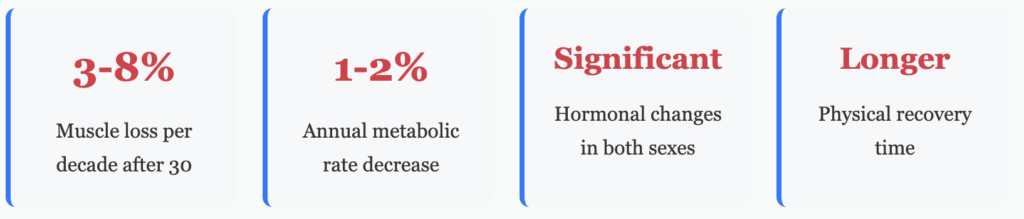
- Muscle loss: Adults lose 3-8% of muscle mass per decade after 30
- Metabolism changes: Basal metabolic rate decreases by 1-2% annually
- Hormone shifts: Both men and women experience significant hormonal changes
- Recovery time: Physical recovery takes longer, making consistency more important than intensity
The Opportunity Window
Starting a health transformation in your 40s offers unique advantages:
- Life experience: You understand what works and what doesn’t
- Financial stability: Resources to invest in quality food, equipment, and professional guidance
- Motivation clarity: Health becomes a priority, not just an option
- Time efficiency: You value programs that deliver results without wasting time
The Science Behind Age-Related Health Changes
Understanding what happens to your body after 40 helps you work with biology, not against it.
Muscle Mass and Strength (Sarcopenia)
Research published in the Journal of Applied Physiology shows that adults lose approximately:
- 3-8% of muscle mass per decade after age 30
- Up to 15% of strength per decade after age 50
- 20-40% of total muscle mass by age 80
The good news: Resistance training can not only stop this decline but reverse it, with some studies showing 20-30% strength gains in adults over 40. See Harvard’s health guide on muscle preservation.
Metabolic Changes
Your metabolism doesn’t just “slow down”—it changes:
- Decreased muscle mass reduces calorie burn at rest
- Hormonal changes affect fat storage patterns
- Insulin sensitivity may decrease, affecting blood sugar control
- Sleep quality impacts hunger hormones and recovery
Cardiovascular Health
The American Heart Association reports that after 40:
- Blood pressure naturally increases
- Arterial stiffness develops gradually
- Cholesterol patterns may shift
- Heart rate variability decreases
The solution: Regular cardiovascular exercise can maintain and even improve heart health markers well into your 60s and beyond.
5 Mental Blocks Preventing Your Health Transformation
Allan Misner identifies five critical mindset obstacles that keep people over 40 from achieving their health goals:
1. The “Windshield” Mentality: Living in the Past
What it looks like: “I used to be able to eat pizza every night and stay thin.”
Why it’s harmful: Past performance doesn’t predict future results, especially with changing biology.
The solution:
- Focus on current capabilities and future goals
- Set new baselines based on your current fitness level
- Celebrate small wins and progress, not just end results
- Action step: Take current measurements and photos—this is your new starting point
2. The “Copilot” Problem: Always Putting Others First
What it looks like: Canceling workouts for others’ needs, eating what the family wants, sacrificing sleep for everyone else’s schedule.
Why it’s harmful: You can’t pour from an empty cup—neglecting your health makes you less able to care for others.
The solution:
- Schedule health activities like unmovable appointments
- Communicate your health goals to family and friends
- Find ways to include others (family bike rides, cooking healthy meals together)
- Action step: Block 30 minutes daily for health-focused activities—no exceptions
3. The “Petals” Pattern: Giving Up When It Gets Difficult
What it looks like: Starting strong but quitting when results slow or life gets complicated.
Why it’s harmful: Health transformation is a marathon, not a sprint—consistency beats intensity.
The solution:
- Start with ridiculously small goals (5-minute walks, one healthy meal)
- Plan for obstacles and setbacks
- Focus on habits, not just outcomes
- Action step: Identify your top 3 obstacles and create specific action plans for each
4. The “Tires” Trap: Feeling Stuck Without Traction
What it looks like: Knowing what you should do but feeling unable to make progress.
Why it’s harmful: Analysis paralysis prevents action, which is the only thing that creates results.
The solution:
- Start with one simple change
- Find an accountability partner or group
- Track progress with metrics beyond the scale
- Action step: Join one health-focused community (online or local) this week
5. The “Atlas” Complex: Carrying Too Much Responsibility
What it looks like: Believing you must do everything perfectly and handle all challenges alone.
Why it’s harmful: Perfectionism leads to all-or-nothing thinking and eventual burnout.
The solution:
- Accept “good enough” as genuinely good enough
- Ask for help and delegate when possible
- Focus on progress, not perfection
- Action step: Identify one health-related task you can delegate or eliminate
Your Step-by-Step Action Plan
Phase 1: Foundation (Weeks 1-4)
Goal: Establish basic habits without overwhelming your current lifestyle
Fitness:
- Walk 10,000 steps daily (use a fitness tracker)
- Add 2 strength training sessions per week (bodyweight exercises count)
- Include 5-10 minutes of stretching daily
Nutrition:
- Eat protein with every meal (aim for 20-30 grams)
- Add one serving of vegetables to each meal
- Drink half your body weight in ounces of water daily
Recovery:
- Aim for 7-8 hours of sleep nightly
- Create a consistent bedtime routine
- Limit screens 1 hour before bed
Phase 2: Building (Weeks 5-12)
Goal: Increase intensity and complexity while maintaining consistency
Fitness:
- Progress to 3-4 strength training sessions per week
- Add interval training 1-2 times per week
- Include flexibility work 3-4 times per week
Nutrition:
- Plan and prep meals for the week
- Learn proper portion sizes for your goals
- Allow for planned treats without guilt
Recovery:
- Monitor sleep quality, not just quantity
- Add stress management techniques (meditation, yoga, journaling)
- Schedule regular medical checkups
Phase 3: Optimization (Weeks 13+)
Goal: Fine-tune your approach based on results and preferences
Fitness:
- Periodize your training for continued progress
- Add sport-specific or fun activities (hiking, dancing, martial arts)
- Consider working with a qualified trainer for advanced techniques
Nutrition:
- Adjust macronutrients based on your results and goals
- Learn to eat well in any situation (travel, restaurants, social events)
- Consider consulting with a registered dietitian
Recovery:
- Optimize your environment for quality sleep
- Develop advanced stress management skills
- Plan regular recovery weeks or deload periods
How to Choose the Right Healthcare Coverage
Your health transformation should be supported by smart healthcare choices. Here’s what to look for:
Essential Coverage Elements
- Preventive care: Annual physicals, screenings, and wellness visits
- Specialist access: Cardiology, endocrinology, and other age-related specialties
- Mental health: Counseling and therapy for stress management
- Physical therapy: Injury prevention and movement optimization
Innovative Options to Consider
- Direct Primary Care (DPC): Unlimited access to your doctor for a monthly fee
- Concierge medicine: Enhanced access and personalized care
- Wellness programs: Gym memberships, nutrition counseling, health coaching
- Telemedicine: Convenient access for routine consultations
Questions to Ask Your Insurance Provider
- What preventive services are covered at 100%?
- Do you offer wellness program discounts or reimbursements?
- What’s the process for seeing specialists?
- Are nutrition counseling and health coaching covered?
- Do you have partnerships with fitness facilities or apps?
Success Stories and Real Results
Allan Misner’s Transformation
- Starting point: Overweight, hypertensive, pre-diabetic corporate executive
- Results: Lost 66 pounds of fat, gained 11 pounds of muscle
- Current status: Certified personal trainer, podcast host, Tough Mudder participant
- Key insight: “It’s not about perfection—it’s about consistency and finding what works for your life.”
The Science of Success After 40
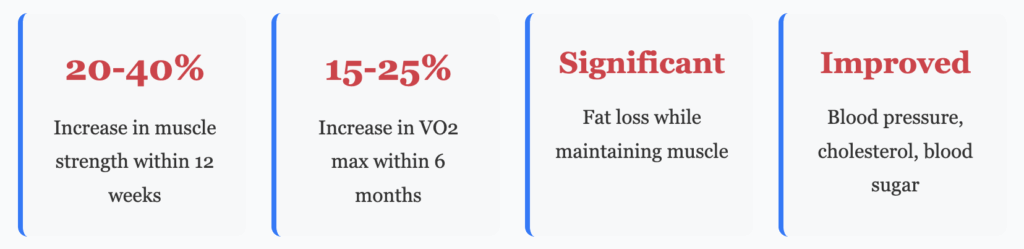
Studies consistently show that adults who begin fitness programs after 40 can achieve:
- Strength gains: 20-40% increase in muscle strength within 12 weeks
- Cardiovascular improvements: 15-25% increase in VO2 max within 6 months
- Body composition changes: Significant fat loss while maintaining or gaining muscle
- Health markers: Improved blood pressure, cholesterol, and blood sugar levels
Common Success Patterns
Successful health transformations after 40 typically include:
- Gradual progression: Starting small and building over time
- Consistency over intensity: Regular moderate exercise beats sporadic intense workouts
- Lifestyle integration: Making health habits part of existing routines
- Professional support: Working with trainers, nutritionists, or health coaches
- Community involvement: Finding workout partners or health-focused groups
Ready to Start Your Transformation?
Your health after 40 isn’t about accepting decline—it’s about strategic improvement. Whether you’re dealing with weight gain, energy loss, or chronic health concerns, the right approach can help you feel stronger and more vital than you have in years.
Take Action Today
- Assessment: Schedule a comprehensive physical and fitness assessment
- Planning: Create a realistic 90-day health improvement plan
- Support: Identify your support system (family, friends, professionals)
- Healthcare: Review your current coverage and consider upgrades if needed
- Accountability: Find ways to track progress and stay motivated
Get Professional Support
At Harlon Pickett Insurance Broker, we help individuals and families find healthcare coverage that supports long-term wellness goals, not just emergency treatment. Because your health transformation deserves a healthcare plan that works as hard as you do.
Ready to discuss a healthcare plan that supports your health goals? Contact us for a personalized consultation.
This article is for educational purposes only and doesn’t replace professional medical advice. Always consult with healthcare providers before starting new fitness or nutrition programs.
About the Author: Harlon Pickett is CEO and founder of Harlon Pickett Insurance Broker, and has over 20 years of experience helping individuals find healthcare coverage that supports their wellness goals. Based in Texas, he specializes in a number of innovative health insurance solutions, including Direct Primary Care, healthshares, and more.